Soft WashNorth Shore
Oil Removal service in the North Shore by Soft Wash North Shore

North Shore · North Chicagoland

Oil Removal in North Shore

At Soft Wash North Shore we remove oil with a surface-specific process that starts with stain assessment, absorbent treatment, and controlled pressure or hot-water cleaning when appropriate.

We use low-pressure soft washing for delicate materials such as vinyl, brick, stucco, cedar, composite siding, and roofs, while surface cleaners and biodegradable detergents suit many concrete and stone areas.

  • Licensed & insured
  • Soft wash certified
  • White glove service

Free estimate

Request your quote

Fast response times · Instant quote confirmations

Overview

Trusted Oil Removal for North Shore Homes

Oil stains can make driveways, garages, loading areas, and walkways across the North Shore look neglected while creating slippery conditions. Coastal weather, freeze-thaw cycles, road salt, and runoff can push petroleum residue deeper into concrete and masonry, so standard rinsing often leaves behind dark marks and lingering odors.

Our approach also considers North Shore site conditions, drainage, landscaping, and local compliance needs. We protect plants and outdoor items, document results with before-and-after photos, and provide practical maintenance recommendations during our complimentary exterior health assessment.

  • North Shore properties face coastal drainage, salt exposure, heavy rainfall, and strict controls on contaminated runoff.
  • We manage oil removal by containing wastewater, selecting surface-appropriate cleaning methods, and preventing degreasers or recovered oil from entering storm drains, soil, or waterways.
  • We first identify the oil type, stain age, surface porosity, and nearby materials before selecting a cleaning method.
  • Our assessment also considers slip risks, drainage paths, landscaping, and runoff controls so we can remove petroleum residue without damaging concrete, pavers, siding, render, or painted finishes.

Methods

Oil Stain Assessment And Surface-Safe Cleaning

We first identify the oil type, stain age, surface porosity, and nearby materials before selecting a cleaning method. Our assessment also considers slip risks, drainage paths, landscaping, and runoff controls so we can remove petroleum residue without damaging concrete, pavers, siding, render, or painted finishes.

Petroleum Residue, Slip Hazards, And Environmental Runoff

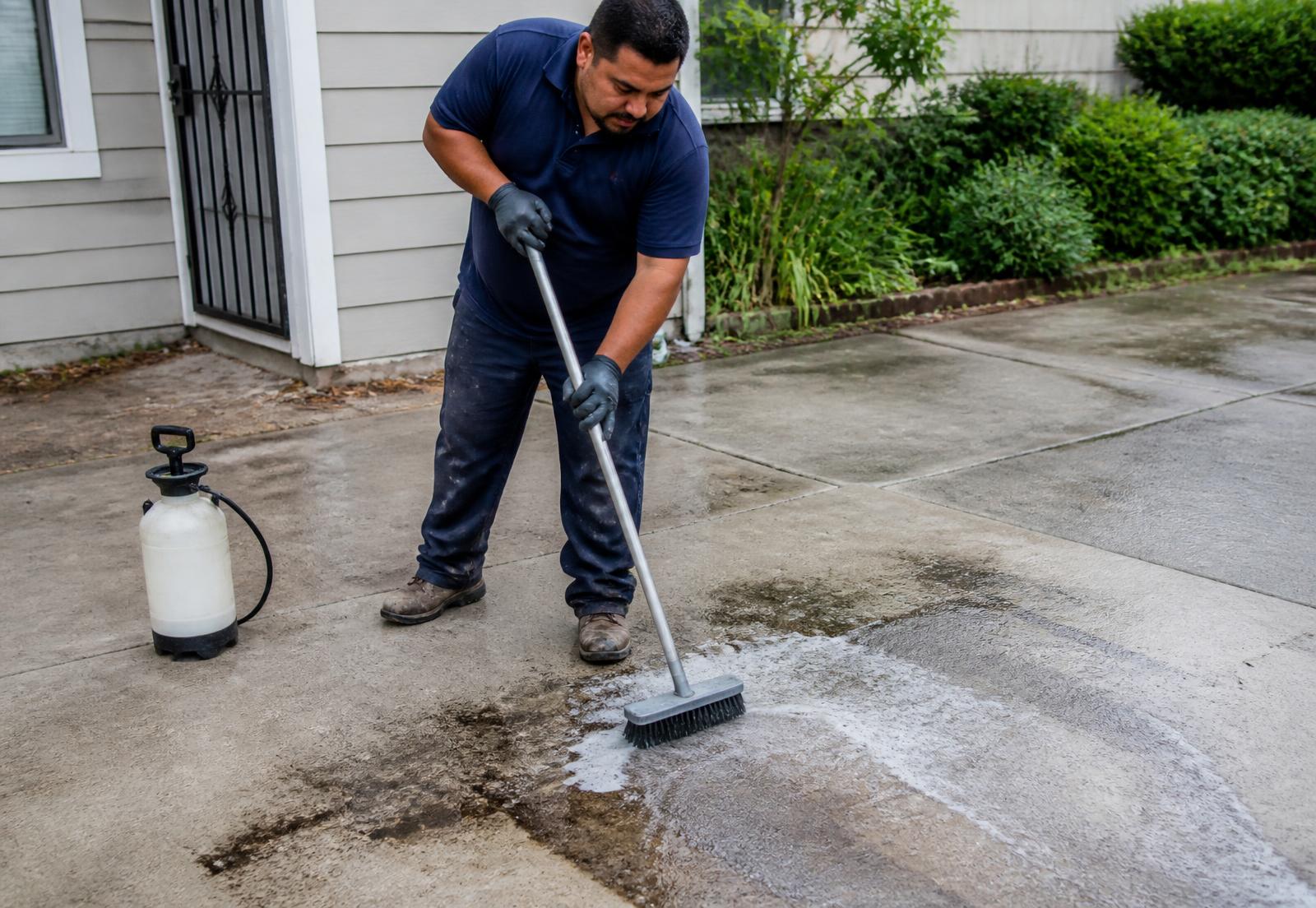
Motor oil, diesel, hydraulic fluid, and cooking grease can penetrate porous concrete and leave a slick film even after the surface appears dry. We inspect the stain’s edges, depth, and surrounding areas, then identify foot-traffic zones, garage entrances, ramps, and other locations where reduced traction could cause a fall.

We protect storm drains and nearby soil before applying detergent. Our process may include absorbent materials, controlled rinsing, and collection or diversion of contaminated water, subject to local requirements. We use biodegradable detergents where suitable, but “biodegradable” does not mean oil-contaminated runoff can enter a drain untreated.

We also check for cracked concrete, loose joint sand, efflorescence, sealers, and sensitive landscaping. Digital before-and-after photographs can document the affected area and help property owners track whether recurring leaks require mechanical repairs.
Hot-Water Pressure Washing For Concrete And Pavers

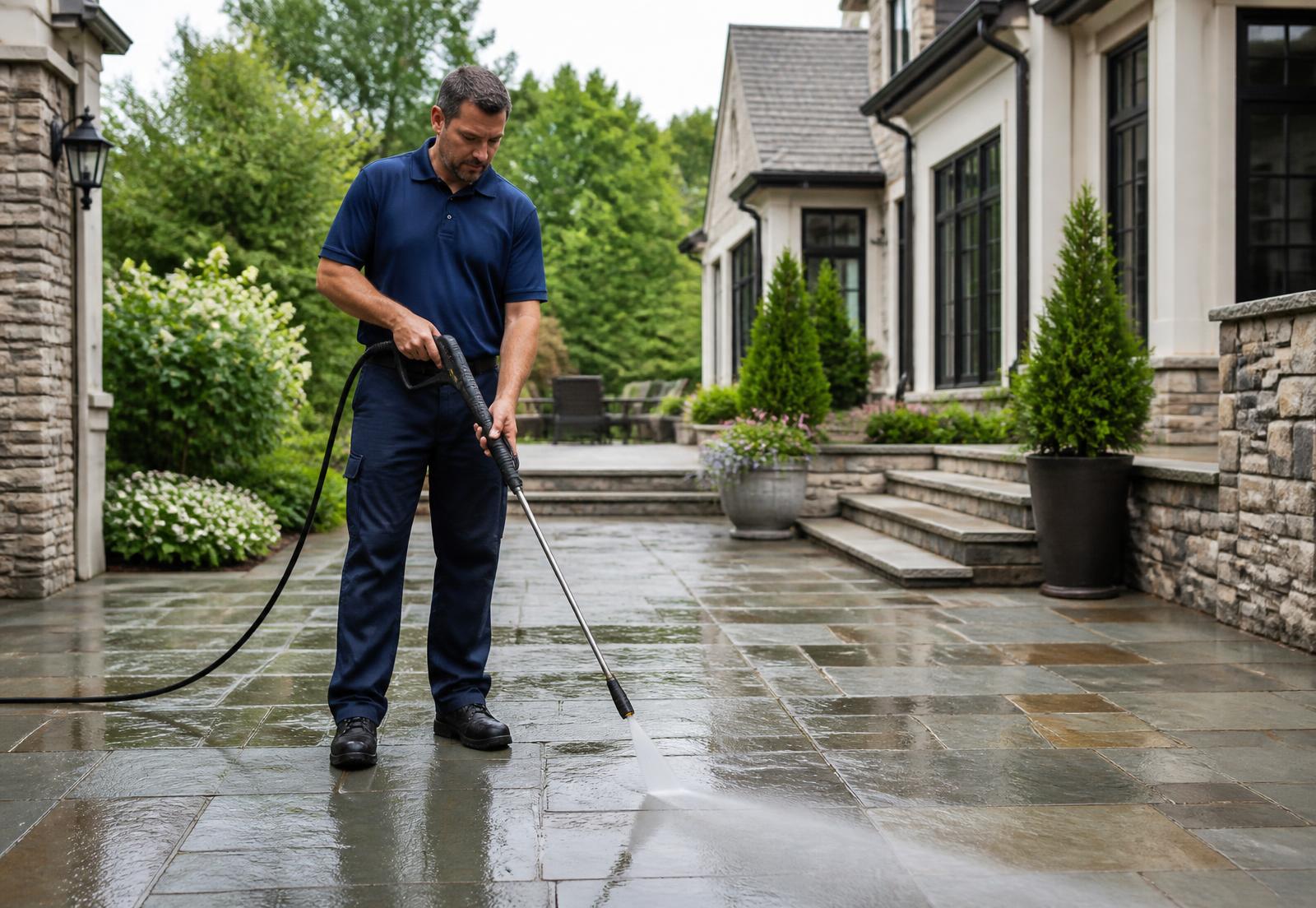
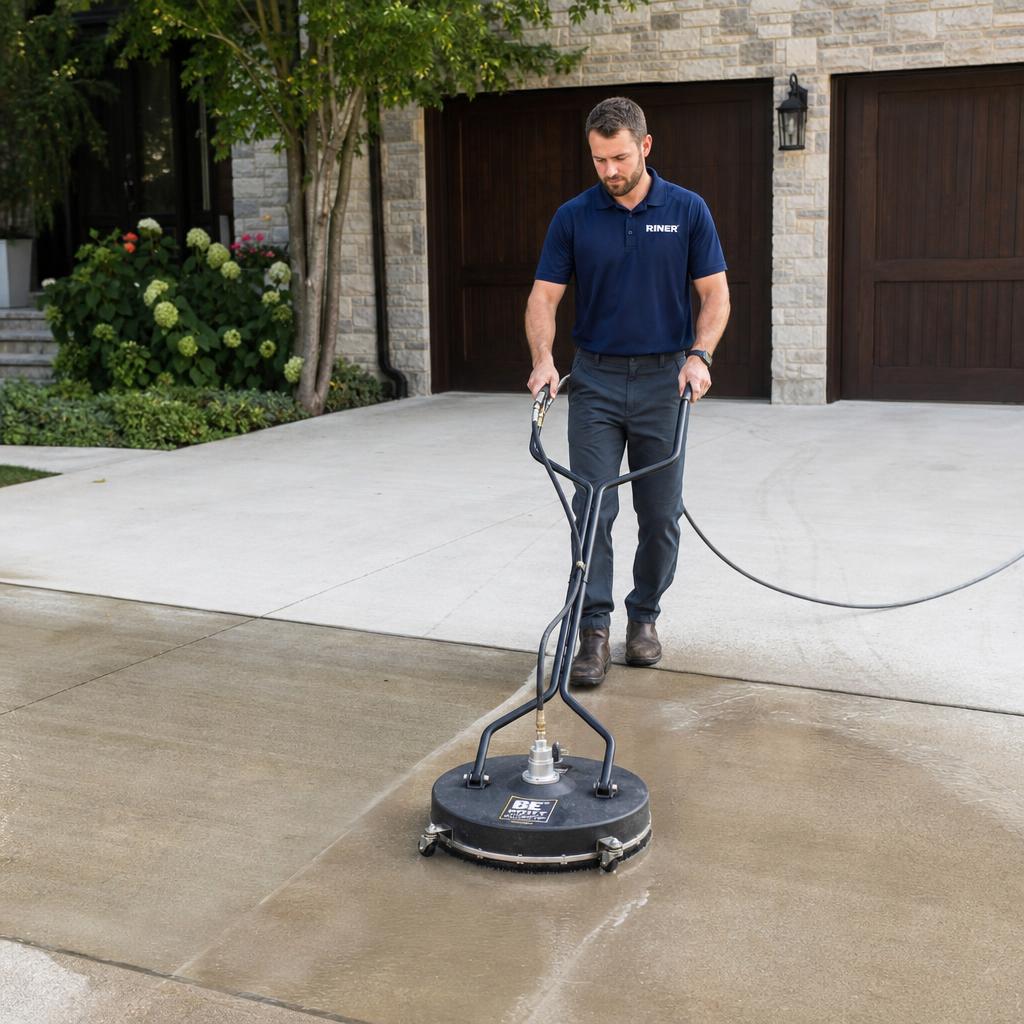
Hot-water pressure washing helps soften grease and lower its viscosity, while a concrete-safe degreaser breaks the bond between petroleum residue and the surface. We apply the product at the correct dilution, allow controlled dwell time, and use a surface cleaner or suitable wand technique to limit streaking and reduce splash.

Concrete tolerates more pressure than many exterior materials, but excessive pressure can expose aggregate, damage weak edges, strip sealers, or erode paver joints. We test a small area first and adjust pressure, temperature, nozzle distance, and cleaning speed to match the material’s condition.

Pavers require additional care because water can displace joint sand and spread oil into adjacent units. After cleaning, we inspect the surface and explain when drying, repeated treatment, or resealing may provide a better result than aggressive pressure alone.

Soft Washing For Adjacent Siding, Render, And Painted Surfaces

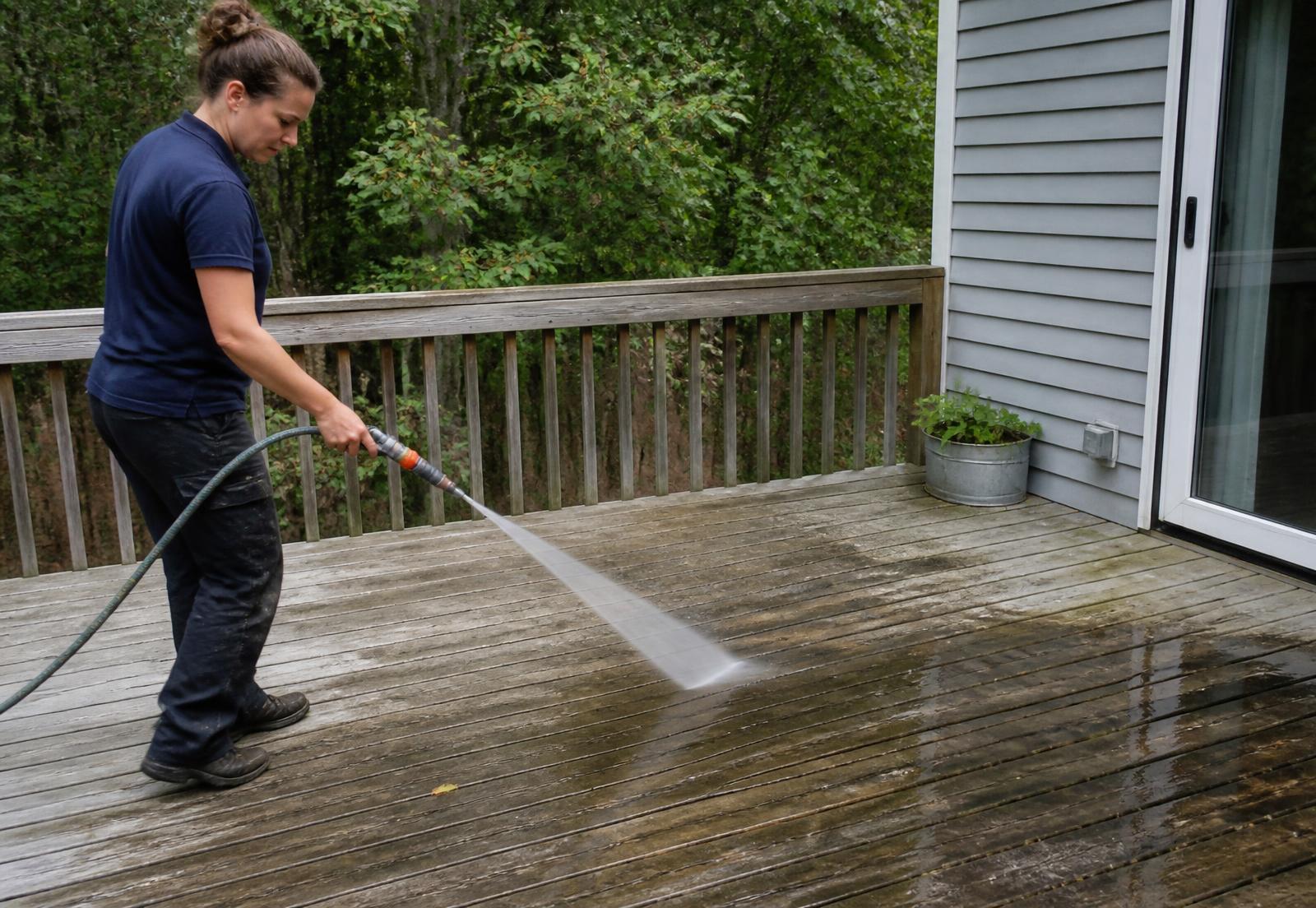
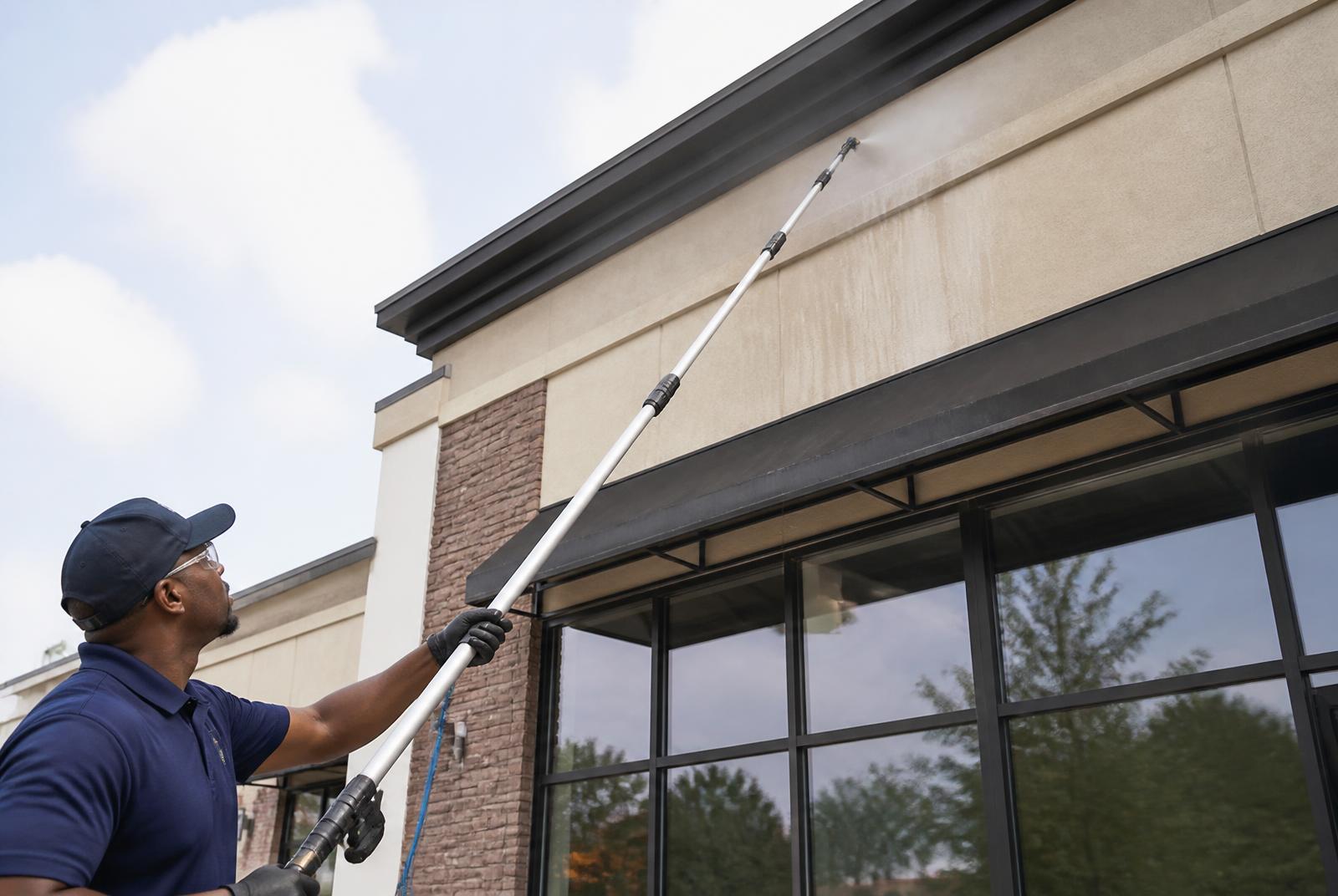
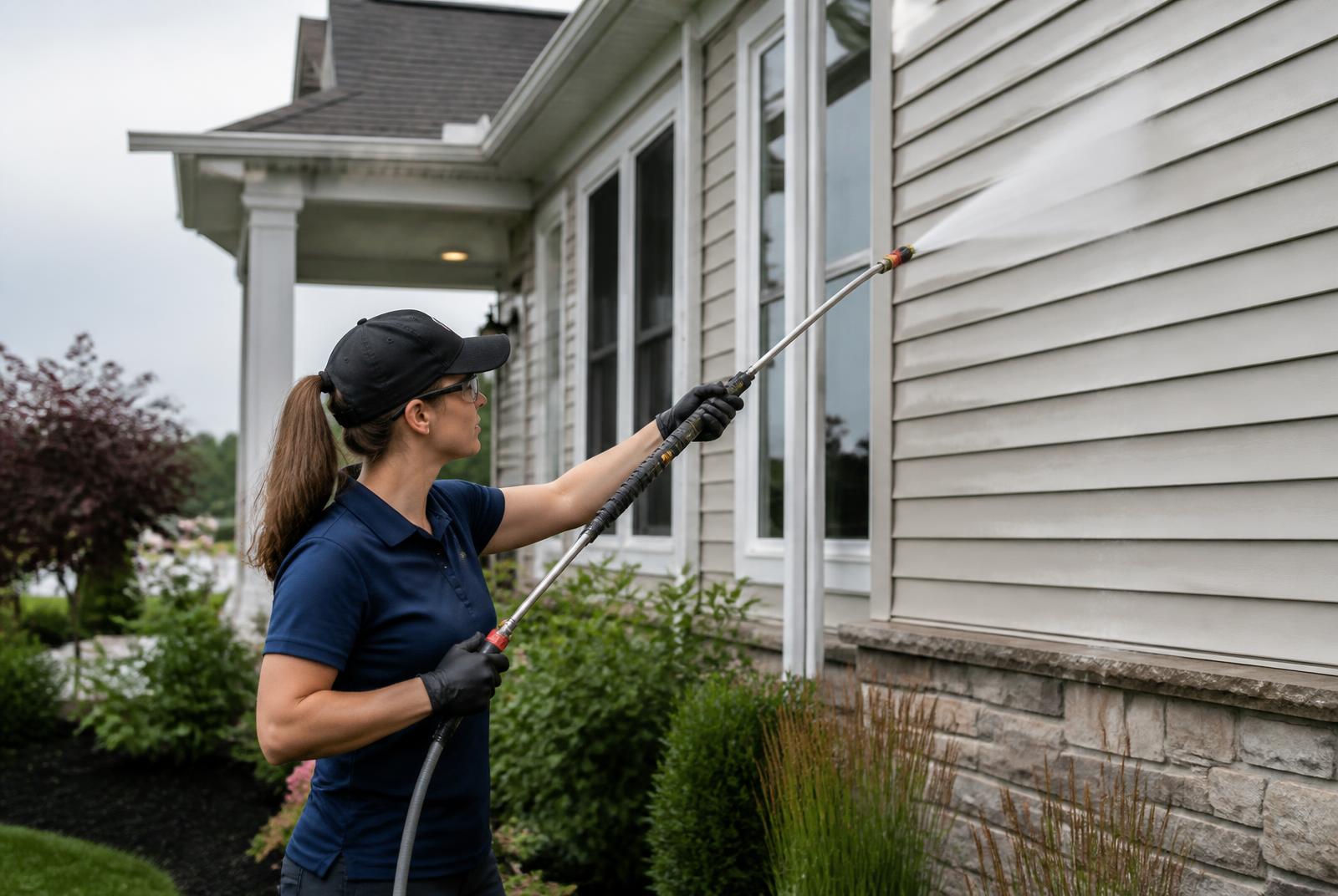
Oil cleaning often occurs beside vinyl siding, brick, stucco, render, cedar, composite cladding, or painted trim. We use low-pressure soft washing on these surfaces because high pressure can force water behind siding, remove paint, scar render, and damage wood fibers.

We select a surface-appropriate detergent, pre-wet and protect plants, cover vulnerable outdoor items, and rinse continuously where needed. Our trained technicians keep the solution away from electrical fixtures, open windows, door thresholds, and unprotected finishes.

We use dedicated equipment and manufacturer-recommended methods whenever available. A final walkthrough checks for residue, overspray, displaced items, open gates, and plant condition, while before-and-after photos record the completed work.

Local conditions

North Shore Site Conditions, Compliance, And Prevention

North Shore properties face coastal drainage, salt exposure, heavy rainfall, and strict controls on contaminated runoff. We manage oil removal by containing wastewater, selecting surface-appropriate cleaning methods, and preventing degreasers or recovered oil from entering storm drains, soil, or waterways.

Local Coastal Drainage And Wastewater Containment

North Shore storm drains often discharge toward streams, harbours, wetlands, or the ocean with limited treatment. During oil removal, we identify nearby drains before work begins and use drain covers, berms, absorbent socks, and temporary collection points to keep contaminated water on the work area.

We use low-pressure soft washing on painted siding, brick, stucco, cedar, composite cladding, and other vulnerable surfaces. For concrete and heavily oiled areas, we may use controlled pressure washing with surface cleaners and vacuum recovery. We do not direct wastewater into stormwater systems unless the relevant authority expressly permits it.

Collected water, oil-soaked absorbents, and contaminated debris require appropriate handling. We document significant releases, follow the applicable local reporting requirements, and coordinate disposal through approved waste contractors when the material cannot enter the sanitary wastewater system.

Driveways, Car Parks, Workshops, And Service Stations

Oil commonly accumulates beneath parked vehicles, around loading areas, beside waste containers, and near workshop entrances. Before cleaning, we inspect the surface, locate drains, identify the likely oil type, and separate free product from staining. Removing pooled oil first reduces the amount of contaminated wash water.

We use pressure washing only where the concrete, asphalt, coating, and surrounding structures can tolerate it. A rotary surface cleaner helps control spray on sound concrete, while vacuum recovery captures water and suspended oil. Soft washing suits adjacent walls, fences, siding, and landscaping because it relies on lower pressure and surface-specific detergents.

Service stations and commercial sites may require a written spill-control procedure, an SPCC plan in applicable United States operations, or local environmental approvals. We keep traffic away from wet work areas, protect fuel infrastructure, and record the waste route for recovered oil and absorbents.

Degreasers, Oil Absorbents, And Protective Surface Sealers

We select biodegradable detergents according to the surface and contaminant rather than using one product everywhere. Degreasers can loosen petroleum films, but incorrect dilution, prolonged dwell time, or uncontrolled rinsing can damage coatings and move contamination into soil or drainage systems. We pre-wet nearby landscaping, protect outdoor items, and rinse plants during the work.

Absorbent pads, socks, granular products, and recovery mats help control fresh spills before washing begins. We place used materials in sealed, labelled containers and arrange disposal based on the contaminant and local waste rules.

After cleaning and drying, we assess whether a penetrating sealer or compatible protective coating suits the surface. Sealers can reduce future oil absorption in porous concrete and natural stone, but they do not replace spill prevention, prompt cleanup, or regular inspections.

Answers

Frequently Asked Questions About Oil Removal

Oil removal depends on the contaminant, surface, stain age, and drainage conditions. We select pressure, temperature, detergents, recovery equipment, and surface protection based on the property and Auckland’s wastewater requirements.

For fresh automotive oil on concrete, we usually apply a biodegradable degreaser, allow sufficient dwell time, agitate the area, and rinse with controlled hot- or cold-water pressure. Hot water often improves removal because it loosens oil before surface rinsing.

Older stains may require several treatment cycles, a surface cleaner, or absorbent material before washing. We avoid excessive pressure, which can etch concrete, spread the contaminant, or drive oil deeper into porous areas.

For larger car parks, we use commercial-grade equipment and wastewater recovery where runoff could enter stormwater drains. We adjust the method for concrete, asphalt, pavers, painted surfaces, and nearby landscaping.

We provide a property-specific quote after reviewing the exterior rather than pricing solely by square footage.